The Permit Most Polson Waterfront Buyers Never Ask About
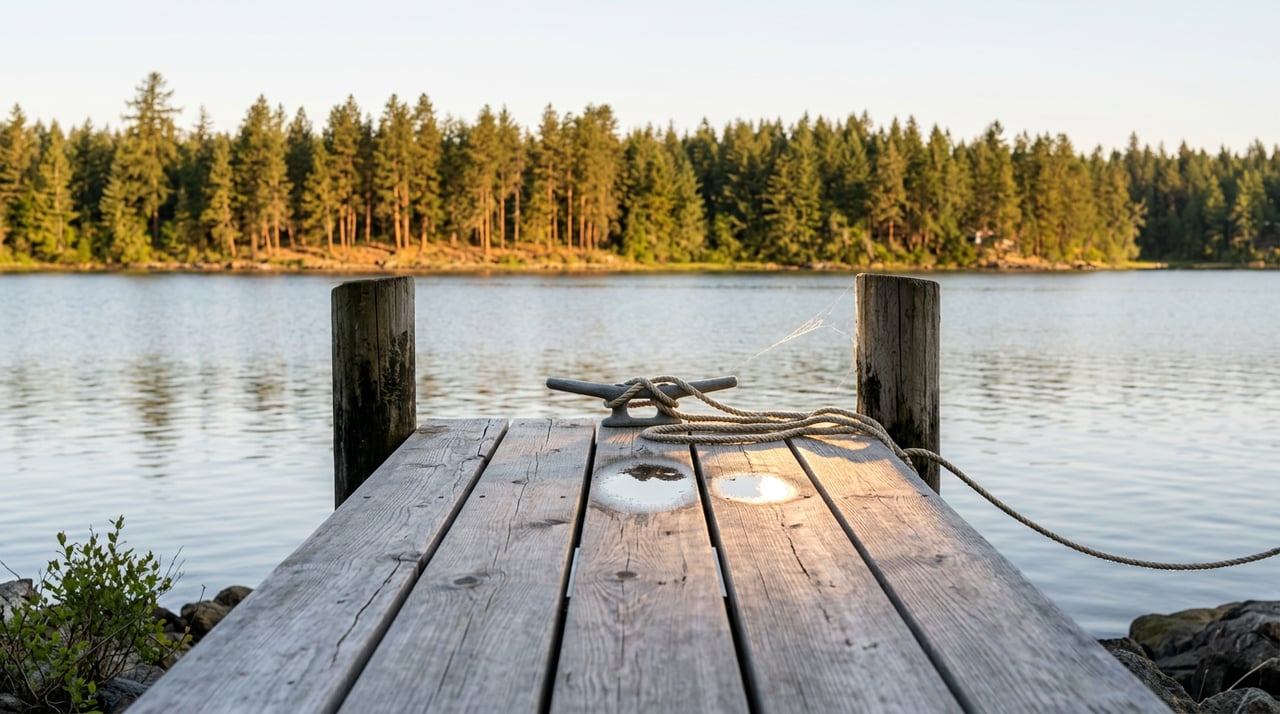
Tyler Cochran spent this past winter doing something he had not done in five years running dock construction crews on Flathead Lake: turning away work. As operations manager for Dock Masters in Polson, Cochran told the Daily Inter Lake in February 2026 that he had received more repair requests over the 2025-26 winter than in any of the previous five years combined, some docks missing a few planks, others completely destroyed.
The reason had nothing to do with storm intensity alone. It had to do with where the lake sat when the storms hit. Most winters, Flathead Lake drops low enough that shoreline structures sit high and dry, safe from ice and wave action. This winter, the lake stayed near full pool through a string of storms, and docks built for a dry winter took the kind of damage they are never designed to absorb. If you are buying or selling waterfront in Polson, that single fact changes what you should be asking before you close.
Flathead Lake looks like a fixed natural feature. It is not. The lake's level is managed by the Séliš Ksanka Ql̓ispé Dam southwest of Polson, operated by Energy Keepers Incorporated, a tribally owned entity of the Confederated Salish and Kootenai Tribes. Full pool is 2,893 feet. In a typical year the lake drops from that summer high to a spring low around 2,883 feet, a ten-foot swing that clears docks and boat lifts well away from ice and winter wave action.
This past year broke that pattern. An atmospheric river event in December pushed lake levels to roughly 2,892 feet by early January, about four feet higher than normal for that time of year, according to reporting from the Daily Inter Lake. Dry conditions brought the lake back down to about 2,888 feet by March, then March storms pushed it up again. By May 2026, the USGS gauge at Polson recorded the lake at 2,892.43 feet, within a foot of full pool, months earlier in the season than owners typically expect.
Contrast that with the year before. In June 2025, hot and dry conditions had forecasters projecting the lake would sit nearly three feet below full pool by August 31, prompting Energy Keepers to negotiate a 45 percent reduction in required minimum flows from the dam just to keep the lake within striking distance of full pool through July, a move reported by Montana Free Press. Two consecutive years, two opposite water problems, both driven by dam operations rather than the calendar.
"With the water being full pool, it caused a lot of damage." — Tyler Cochran, operations manager, Dock Masters, Polson
Here is the part most buyers miss entirely. On the south half of Flathead Lake, the lakebed itself is not privately owned. It is held in trust for the Confederated Salish and Kootenai Tribes, a status that traces directly back to a dispute in Polson Bay.
In the 1970s, a landowner named Jim Namen began building an earthen breakwater into the lake from his Polson Bay property. The Tribes sued, and a federal district court held that the bed and banks of the south half of Flathead Lake belong to the United States in trust for the Tribes, while riparian landowners like the Namens keep rights of access and wharfage out to navigable water. The Tribes then enacted the Shoreline Protection Ordinance, known as Ordinance 64A, in 1977 to regulate riparian structures on that trust land, according to the Tribes' own account of the program's history. When the ordinance's reach was challenged again, the Ninth Circuit's 1982 ruling confirmed the Tribes' authority to apply Ordinance 64A to non-member landowners within the reservation.
Polson sits at the southern tip of Flathead Lake, inside the Flathead Indian Reservation boundary. That history is not a historical footnote for anyone buying waterfront here. It is the reason a dock repair after a storm involves more than a contractor and a homeowner.
For any property within the reservation boundary, work below the full pool shoreline requires sign-off from two separate governments, not one. The Flathead Lakers lay out the practical split clearly.
| Permit | Who issues it | What triggers it |
|---|---|---|
| Shoreline Protection Permit | CSKT Shoreline Protection Office | Any work planned lakeward of the full pool shoreline, on reservation land |
| Lakeshore Protection Permit | Lake County | Any work within 20 horizontal feet of the full pool shoreline on land |
| Section 404 Permit | U.S. Army Corps of Engineers | Any dredging or fill lakeward of full pool |
Both permits can apply to the same dock repair at the same time. Coverage of a 2022 Lake County hearing on shoreline regulations from the Lake County Leader offers a useful look at how these two processes actually move. A county planning staffer told commissioners the department handles around 100 lakeshore permits in a typical season, on top of zoning, subdivision, and floodplain reviews, and that at any given time staff are juggling 30 to 40 applications apiece. Polson attorney Doug Wold, a longtime resident of the lake, pointed out at the same hearing that the Tribes' Shoreline Protection Office typically turns permits around faster. Two governments, two queues, two different paces, and a buyer who assumes one permit covers everything is the buyer most likely to be surprised at closing.
Put the pieces together and the picture for 2026 looks like this. The lake entered spring already close to full pool rather than at its usual low, which means docks along Polson Bay and the south shore have spent more of this year sitting in water than in a typical year. Given Dock Masters' account of a five-year record repair season just months earlier, a meaningful share of that dock inventory has likely seen storm stress that has not yet been fully assessed. If that repair work requires permits from CSKT, Lake County, or both, the timeline is not something a buyer or seller controls by picking a closing date. It is set by two separate offices working at two separate speeds.
Before you write an offer on waterfront in Polson Bay or anywhere else on the reservation side of the lake, a few questions are worth asking directly:
If you own waterfront in Polson and any part of your dock, seawall, or shoreline structure has been repaired, modified, or newly built in recent years, document which permits were obtained and from which office. A seller who can point to a completed CSKT registration and a Lake County permit on file removes one of the biggest sources of buyer hesitation on the reservation side of the lake. A seller who cannot answer the question at all is handing that uncertainty to the next owner.
Does every Polson waterfront property need a tribal permit? Only if the parcel sits within the Flathead Indian Reservation boundary. That boundary covers a significant share of Polson Bay and the surrounding south shore, which is why the question is worth confirming property by property rather than assuming.
Is Flathead Lake's water level natural? No. It is managed by the SKQ Dam under Energy Keepers Incorporated, a CSKT enterprise, operating under federal oversight that balances full pool targets against downstream flow requirements.
How fast can I expect a permit to move? Local reporting suggests the CSKT Shoreline Protection Office generally turns permits around faster than Lake County's planning department, which handles lakeshore work alongside zoning, subdivisions, and floodplain reviews across the county. Neither timeline is guaranteed, and a property that needs both permits should plan for the slower of the two.
Waterfront ownership on Flathead Lake comes with real rewards and real fine print, and the fine print changes depending on which side of the reservation boundary your dock happens to sit on. If you are weighing a purchase or a sale in Polson Bay and want a straight read on what a specific parcel's shoreline history looks like, Dalon Pobran has spent years working this exact stretch of shoreline, on the water and now in the transactions themselves. Let's connect before you write the offer, not after.


Whether you are a first-time buyer, a seasoned investor, or somewhere in between, I bring the Flathead Lake Area market knowledge and personal attention that make all the difference.