The Real Reason So Much of Dayton's Shoreline Is Planted in Cherries
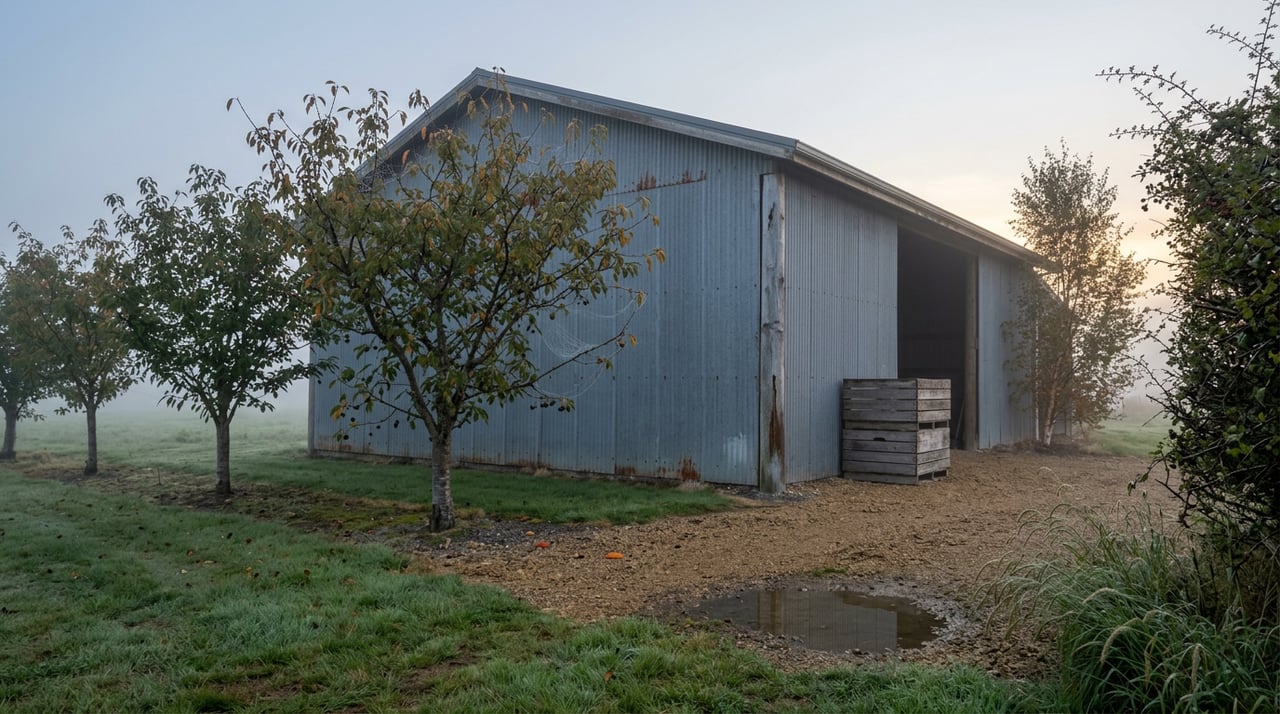
Drive the stretch of Highway 93 between Dayton and Elmo and you will pass rows of cherry trees running down toward the water on parcels that would otherwise carry price tags built for waterfront homesites, not fruit stands. The postcard read is heritage: this is cherry country, has been for generations, and the trees are proof of that. The harder read, the one that actually explains why so many of these parcels are planted the way they are, is that a handful of cherry trees can be the difference between a tax bill built on the land's value as an orchard and one built on its value as a piece of Flathead Lake shoreline.
That difference is not small, and it is not new. What changed recently is how visible it has become, both to the state Legislature and to the sellers now marketing that tax treatment as a feature of the listing itself.
Montana taxes agricultural land on what it can produce, not on what it could sell for. A state analysis covering 2023, the most recent year with detailed data, found that residential properties under 20 acres carried a median effective tax rate of about $1,609 per acre on the underlying land, while comparable parcels with a full agricultural designation paid roughly $6.61 per acre. That is not a typo. It is the gap between valuing land by its market price and valuing it by its production income, and it is why an acre of lake-adjacent ground with six cherry trees on it can be taxed at a small fraction of what an identical acre next door pays if it is classified as a residential lot.
To qualify, a landowner needs to show at least $1,500 in gross income each year from an agricultural product grown and sold from the land. For a hay operation, that threshold means real acreage and real cost. For a fruit tree orchard, a specialty crop class recognized under Montana's agricultural land rules, it can mean far less land and far fewer trees. The $1,500 figure has not moved since 1986.
Brian Campbell, who runs a cherry orchard and a growers' co-op on Flathead Lake, has watched the incentive play out on land around him. He put it plainly: "There's people that totally take advantage of this and treat it as just a big loophole in the system."
This is not an abstract policy debate for Dayton buyers. It shows up in the listings themselves. A Dayton property on Mello Cove Lane, roughly 7.5 acres with three seasonal cabins and lake frontage, is marketed with the note that it is taxed as agricultural, with water rights drawn from Flathead Lake feeding the cherry, apple, plum, and pear trees on the property. A comparable orchard near Polson, marketed as Sunset Vista Cherry Orchard, lists "significant tax benefit potential with orchard ownership" as a stated selling point alongside the lake and mountain views.
| Land use classification | Median effective tax rate, land only (2023) |
|---|---|
| Residential, under 20 acres | about $1,609 per acre |
| Full agricultural designation | about $6.61 per acre |
Sellers have caught on that the tax treatment is worth advertising. Buyers comparing price per acre across a handful of shoreline parcels are not always comparing land on equal footing. Some of what looks like a bargain price for waterfront acreage is a price that already assumes the buyer will keep the orchard classification intact, and that assumption is where the friction starts.
Agricultural classification is not a permanent label stapled to a parcel. It is tied to an application, and that application belongs to the person using the land, not the land itself. When ownership changes, the new owner has to file an Agricultural Land Classification Application, known as Form AB-3, with the Department of Revenue by March 1 to keep the designation current. If a previous owner had the classification and a new owner buys the property partway through the year, the state's own guidance walks through the scenario directly: the new owner has to file that application in a timely way and affirm the property will continue in the same agricultural use, and the department can ask for the process to be repeated the following year to confirm the land still qualifies.
For young orchards that have not yet reached full production, there is a provisional classification available for up to five years while the trees mature, which is useful but also a deadline. It assumes the trees are, in fact, being grown for market, not simply planted and left.
None of this is theoretical. A shoreline orchard about 13 miles south of Bigfork, long classified as agricultural, became the subject of a multi-year property tax dispute after its owners, John and Rebecca Nasgovitz, began renting cabins on the property through the vacation rental site Vrbo. The Department of Revenue decided the rental activity made part of the operation commercial rather than agricultural, and the appraised value jumped by nearly a million dollars in a single reassessment. The owners appealed and eventually won back the agricultural classification, but the department declined to refund the taxes it had already collected during the years the dispute was working through the system.
The lesson for a Dayton buyer is not that vacation rentals and orchards can never coexist. It is that the classification follows how the land is actually used, and a change in use, even a change that seems incidental to the orchard itself, can trigger a reassessment that outpaces however the property was marketed at closing.
Even where the tax classification holds, the water that keeps the trees alive is a separate legal question. Montana follows prior appropriation, meaning nobody owns water outright. What a landowner holds is a right to put a specific amount of water to beneficial use, and that right carries a priority date that determines who gets water first in a dry year. A parcel can have a beautiful stretch of shoreline and a weak or poorly documented water right, or modest frontage and an old, senior right that holds up when the lake runs low. The view does not tell you which one you are buying. The paperwork does.
Montana's statewide water rights adjudication is still working through basin by basin, and the Flathead basin reached a preliminary decree stage in early 2025, a step that gives existing claimants a defined window to confirm or correct the rights tied to their land. For anyone buying acreage with an orchard attached, that irrigation right is worth verifying on its own terms, separate from whether the tax classification transfers.
A cherry orchard on a Dayton listing is not a red flag. It is a detail that needs the same due diligence as anything else that affects value and cost of ownership. Before treating the tax classification as a given:
If I buy a property with an existing cherry orchard, do I automatically keep the agricultural tax classification? No. The classification is tied to an application filed by the person using the land. A new owner has to file Form AB-3 with the Department of Revenue, generally by March 1, to carry the classification forward, and the department can require proof in later years that the land still meets the income threshold.
Can I turn a cherry orchard into a short-term rental without losing the ag classification? It depends on how the department views the mix of uses. A documented case on Flathead Lake shows that adding vacation rental income to an orchard property led the state to reclassify part of it as commercial, which raised the appraised value substantially before the owners successfully appealed.
Does an orchard's water right guarantee irrigation in a dry year? Not by itself. Montana water rights carry a priority date, and senior rights are served before junior ones when supply runs short. A property's water right needs to be checked on its own merits, independent of how attractive the orchard looks in person.
If you are weighing a shoreline or acreage purchase around Dayton and want a clear-eyed read on what a specific parcel's tax and water history actually looks like before you write an offer, Dalon Pobran has spent years working this stretch of the lake and can walk through the details with you. Let's Connect.


Whether you are a first-time buyer, a seasoned investor, or somewhere in between, I bring the Flathead Lake Area market knowledge and personal attention that make all the difference.